




WatchGas Xs Sensor: Should You Choose SST1E or SST5?
New to the WatchGas Xs Sensor? Start with our introduction article: What Is the WatchGas Xs Sensor? → Read the article
After understanding what the WatchGas Xs Sensor is, the next question is usually straightforward:
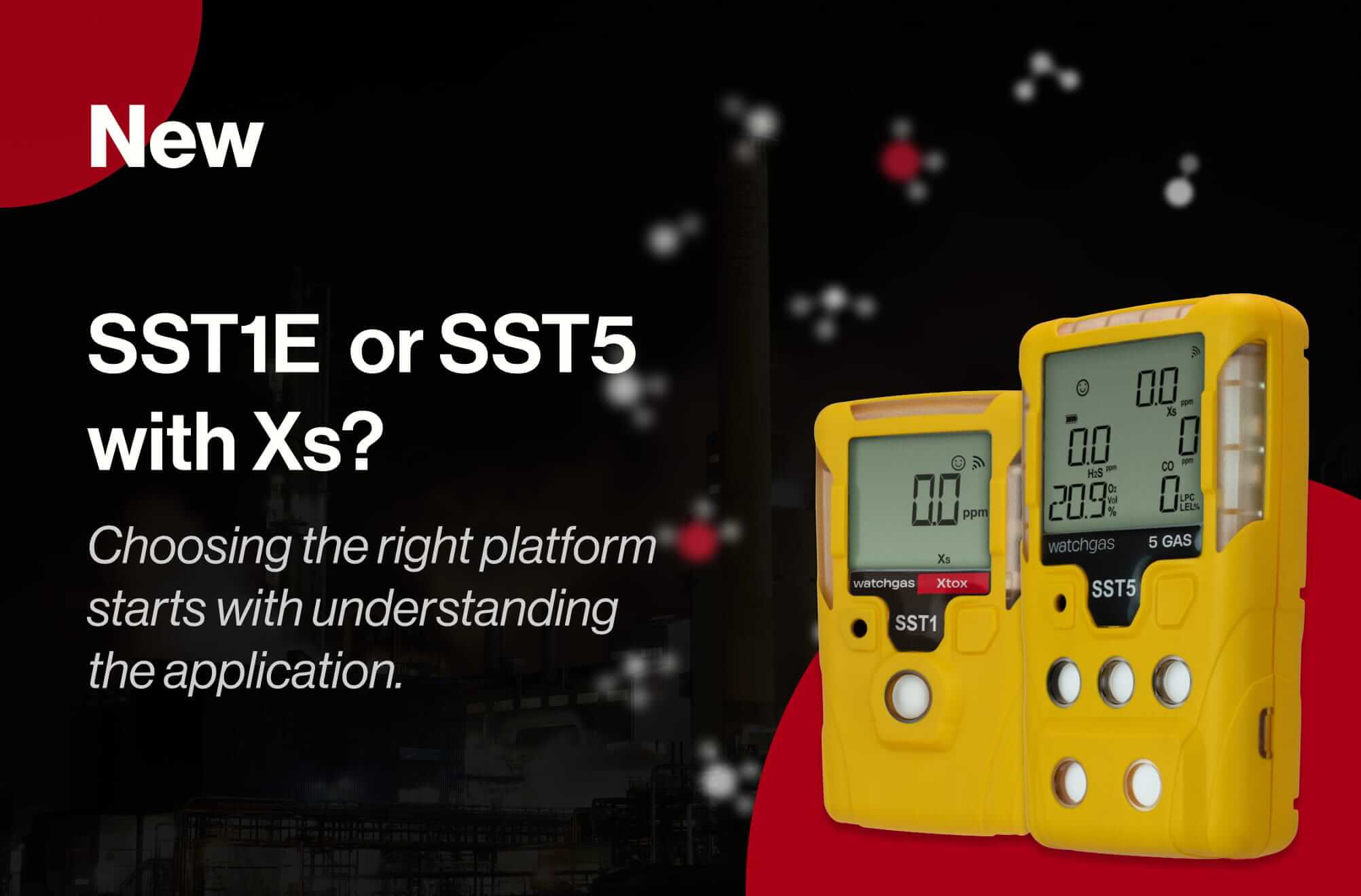
Should I choose SST1E with Xs or SST5 with Xs?
Because Xs is application-driven, selecting the right platform starts with understanding the environment. Consider the target gas or vapor, whether multiple hazards may be present, the potential impact of cross-sensitivities, and whether the objective is early warning or more specific gas monitoring. Once these factors are understood, the choice between SST1E and SST5 becomes much more straightforward.
When SST1E with Xs Is Usually the Better Fit
The SST1E is a compact single-gas detector platform that can be configured with the Xs sensor. It is often suitable when the customer has one particular gas or vapor concern and wants a simple, wearable solution.
Typical examples include:
- A paint shop supervisor wants personnel to receive an early warning if solvent vapors begin accumulating.
- A chemical warehouse manager wants workers to be alerted if unexpected vapor releases occur during handling operations.
- A vessel operator wants awareness of phosphine-related risks during specific fumigation activities.
In these applications, priorities are typically simplicity, personal protection, portability, and early awareness rather than broad multi-gas monitoring.
Choose SST1E with Xs when the application is focused, and the customer needs a compact detector for one selected gas or vapor concern.
When SST5 with Xs Becomes More Valuable
The SST5 becomes more relevant when workers already need protection against several common hazards at the same time, such as:
- Oxygen deficiency
- Carbon monoxide
- Hydrogen sulfide
- Combustible gases
In these situations, Xs becomes part of a broader monitoring strategy rather than the only sensor of interest.
Typical examples include:
- A chemical production facility already monitors standard atmospheric hazards but wants additional awareness of specific solvent or vapor risks.
- A maintenance team enters different process areas where multiple hazards may exist at the same time.
- A contractor works across several industrial sites and needs broader gas coverage while still addressing an application-specific vapor concern.
Choose SST5 with Xs when the application already requires multi-gas monitoring, and Xs is needed as an additional application-specific sensor layer.